
Hot Fusion Keratin Bond Hair Extensions: U-Tip Application to Removal
Quick answer
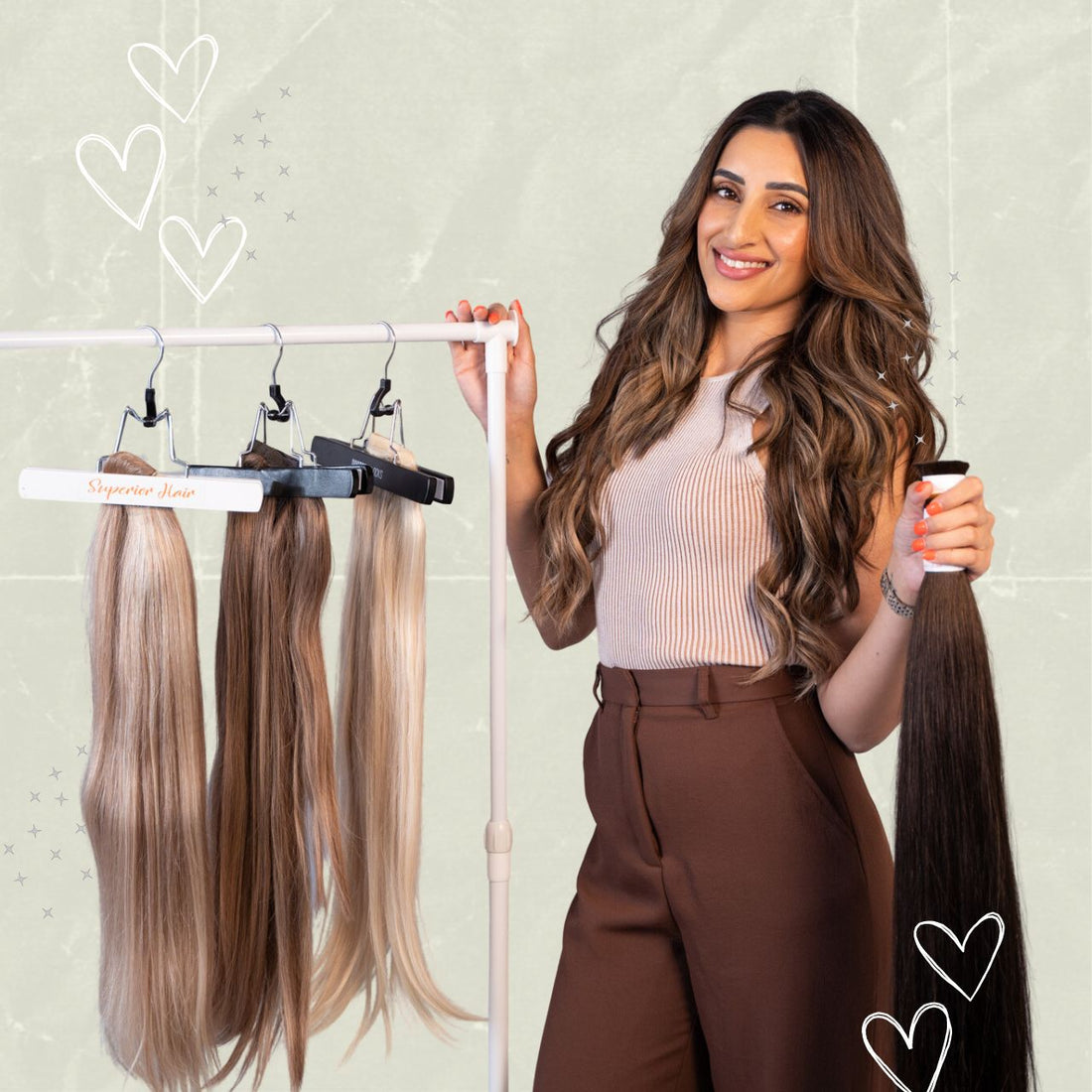
Keratin bond hair extensions are individual strands tipped with keratin that a stylist melts around a small section of natural hair using a hot fusion tool. Superior Hair U-tips run 1g per strand, 25 strands per 25g pack, and hold for up to three months before removal and reapplication.
Fusion is one of the oldest professional methods still in daily use, and it survives for a reason. Done well, a keratin bond moves in every direction, sits flat under fine hair, and gives your client a long stretch between appointments. Done carelessly, it slips, matts at the root, or comes out with natural hair attached. The difference is almost never the hair. It is sectioning, bond size, heat control, and removal technique.
In this guide
- What keratin bond hair extensions actually are
- Choosing the right client for U-tips
- Consultation, color matching, and quantity
- Application: sectioning, placement, bond formation
- The first week and what to tell your client
- Maintenance and the reapplication window
- Removal without breaking the natural hair
- Where fusion sets go wrong
- Keratin bond extensions FAQ
Building your semi-permanent menu?
Fusion sits alongside tape, nano tips, and wefts in a full professional offering. Seeing the methods side by side makes it easier to place each client on the right one.
Browse the professional semi-permanent range →What keratin bond hair extensions actually are

A U-tip is a small bundle of hair pre-tipped with a U-shaped piece of solid keratin. You thread a fine section of the client's natural hair through the open curve of the U and close the bond with a heated fusion connector. The keratin softens, wraps the hair, and hardens into a flexible cylinder as it cools. Because the bond is keratin rather than tape or a metal ring, it allows full 360 degree movement, which is why fusion still reads as one of the most natural-feeling methods on the head.
"Pre-bonded" covers the whole family, and U-tip, I-tip, and flat tip describe the shape of that keratin end. Superior Hair supplies U-tips in 18 inch and 22 inch lengths at 1g per strand, 25 strands to a 25g pack, using the same cuticle-intact Remy hair that runs through the rest of the professional lines. Cuticle direction matters more here than in almost any other method, because individual strands rotate freely against each other all day. Non-Remy hair in a fusion set will tangle at the mid lengths within weeks. If you want the longer explanation, our article on why cuticle-intact double drawn hair lasts longer covers the manufacturing side.
Choosing the right client for U-tips
Fusion rewards clients with medium to thick density who want length without sitting in your chair every six weeks. It is less forgiving on very fine or fragile hair, where a 1g strand on a small natural section creates more tension than that hair can carry. A bead or tape method spreads load better there, and saying so at consultation saves a difficult conversation at removal.
| Method | Attachment | Typical wear before refit | Best suited to |
|---|---|---|---|
| Hot fusion U-tip | Keratin melted with a heat tool | Up to three months | Medium to thick density, clients wanting long intervals |
| Nano tip | Silicone-lined bead, no heat | Move-up around 8 to 10 weeks | Finer hair, heat-sensitive clients, reusable strands |
| Tape-in | Adhesive sandwich panel | Move-up around 6 to 8 weeks | Fast application, fine to medium hair, flat finish |
| Weft | Sewn or beaded row | Move-up around 6 to 8 weeks | Heavy volume, thick density, fastest full-head coverage |
If a client wants strand-by-strand placement but cannot take heat, or has had a previous fusion set go badly, move them onto nano tip extensions rather than trying to make fusion work. The placement logic is nearly identical, so your sectioning skills carry straight across.
Consultation, color matching, and quantity
Work out quantity before you talk shade. Superior Hair recommends 1 to 2 packs for added volume and 4 to 6 packs for an average full head, which puts a typical full application at 100 to 150 bonds. Density and the size of the length jump shift that. A client going from shoulder length to 22 inches needs more mid-length filler than one adding 4 inches, or the set reads thin at the ends.
For shade, match in natural daylight against dry, clean hair, and match the mid lengths rather than the root. Fusion sets are worn long, so a root shadow effect happens naturally as the client's regrowth pushes the bonds down. Blending two shades through the set, or dropping a slightly deeper shade underneath, will read more convincingly than a single flat match. The hot fusion U-tip shade guide shows the full range for this line, and a physical shade ring on the bench beats a screen every time, since monitors misrepresent ash and beige tones badly.
Do any color service first and let the hair rest before installing. Bonds sit against the mid shaft, and applying over hair still fragile from a lightening service invites breakage at removal.
Not certified in fusion yet?
Heat tools, bond size, and removal technique are all far easier to learn with structured training than from a video. Superior Hair runs education for stylists adding professional methods to their menu.
See the Training AcademyApplication: sectioning, placement, bond formation

Start with hair clarified, with no conditioner, silicone, or oil near the roots. Residue is the most common cause of a bond slipping out in week two. Blow dry completely, because keratin will not grip damp hair.
Sectioning
Work in clean horizontal rows from the nape upward, leaving a perimeter of natural hair at the hairline and around the ears so nothing shows in a ponytail. Stagger the rows in a brick-lay pattern rather than stacking bonds above each other, which keeps the set flat and stops a ridge forming. Leave roughly a finger's width between the scalp and the top of the bond. Too close and the client feels it on the pillow and cannot brush the root. Too far and it shows when the hair is worn up.
Section size and bond size
Match the natural section to the weight of the strand. A 1g U-tip needs enough hair to carry it, but overloading the section creates a bulky bond that never lies flat. Consistency across the head matters more than any single measurement, because uneven sections mean uneven tension, and that is what causes localized shedding at the hairline.
Heat and sealing
Set your fusion connector to the temperature your tool manufacturer specifies for keratin, and let it reach a stable heat before the first bond. You want the keratin just molten, not bubbling or smoking. Clamp, then roll the softened bond between your fingers into a slim cylinder as it cools, so it sets flat and rounded rather than lumpy. Let each bond cool fully before brushing through. Shaped while soft, it holds better and feels like nothing against the scalp.
The first week and what to tell your client
Keep the hair dry for the first 48 hours. The keratin has hardened, but the bond benefits from being left alone while the client learns to brush around it. After that, aftercare decides whether the set reaches three months or falls apart at eight.
- Sulfate-free and oil-free shampoo, kept off the bond line. Oils and heavy silicones break keratin down.
- Condition from the mid lengths down only.
- Brush twice daily with a boar bristle extension brush, holding the hair above the bonds to take the pull off the root.
- Never sleep on wet hair. Loose braid or a low twist overnight.
- Keep hot tools off the bonds themselves, and keep heat on the mid lengths moderate.
Send the client home with this in writing. Our hair care guide covers washing, drying, and product choice in more detail.
Maintenance and the reapplication window
Unlike tape or bead methods, fusion bonds are not moved up. The set is worn until removal, then re-tipped or replaced and applied fresh. Superior Hair U-tips hold for up to three months, and most clients land in the 10 to 12 week range depending on growth rate and aftercare.
Book a check at around the six week mark anyway. Natural hair grows roughly half an inch a month for most people, so by six weeks the bonds have travelled far enough down the shaft that shed hair starts collecting above them, which is where matting begins if nobody intervenes. A short appointment to check for tangling, remove any bonds that have slipped, and confirm the client is brushing correctly protects the hair. It also gives you a natural moment to book the removal rather than waiting for a panicked call at week fourteen.
Removal without breaking the natural hair
Removal is where fusion earns or destroys its reputation, and it is almost always rushed. A full head of 150 bonds is not a fifteen minute job.
Work in the same clean rows you applied in, from the nape up. Saturate each bond with an alcohol-based keratin bond remover and give the solution time to penetrate, which is the step people skip. Then crush the softened bond with removal pliers, working it until it crumbles rather than snapping it in one go. Slide the strand down and off. If it resists, the bond is not broken down yet, so apply more solution and wait. Never pull against resistance and never cut a bond free with the natural hair still threaded through it.
Expect shedding at removal and explain it beforehand. Hair that would have fallen out naturally over three months has been held in place by the bonds, so it all releases at once. That is normal shedding, not damage, and a client who has been warned will not panic. After removal, comb through from the ends to clear any matting at the old bond line, then clarify, treat, and dry before assessing whether the hair is in condition for a new set the same day.
Keratin bonds are not reusable in the way beads are. Once the keratin is crushed, that strand needs re-tipping before it can go back in, so plan on fresh hair for the reapplication unless you offer a re-tipping service.
Where fusion sets go wrong
Five failures account for most of the problem sets that walk in for a fix. Bonds placed too close to the scalp, which the client can feel and cannot brush past. Sections too small for the weight. Product residue at application, which stops the keratin gripping. No six week check, which lets shed hair matt above the bonds. And rushed removal, which is where breakage happens.
None of those are hair quality problems, and none are solved by switching brands. If you are new to the method, our beginner's guide to pre-bonded extensions is a good companion read before your first full head.
Stock your fusion sets in the shades your clients actually ask for
Cuticle-intact Remy U-tips in 18 and 22 inch, 25 strands per pack, ready for your next full head.
Shop hot fusion U-tip extensions →Keratin bond extensions FAQ
How long do keratin bond hair extensions last?
Superior Hair hot fusion U-tips are designed to hold for up to three months of wear. Most clients reach removal somewhere between 10 and 12 weeks, depending on hair growth rate and aftercare. Fusion bonds are not moved up like tape or beads, so at the end of that window the set is removed completely and applied fresh.
Do keratin bond extensions damage your hair?
Correctly applied and correctly removed, they should not. Damage in fusion sets comes from sections that are too small for the weight of the strand, bonds set too close to the scalp, matting left unchecked, or a removal that is rushed before the keratin has fully broken down. Technique, not the method itself, decides the outcome.
How many packs of U-tips do I need for a full head?
Superior Hair recommends 1 to 2 packs for added volume and 4 to 6 packs for an average full head. Each 25g pack holds 25 strands at 1g per strand, so a full application typically sits between 100 and 150 individual bonds. Thicker density or a bigger length jump will push you toward the upper end.
How are keratin bond extensions removed?
Saturate each bond with an alcohol-based keratin bond remover, allow it to penetrate fully, then crush the softened keratin with removal pliers until it crumbles and slide the strand off. Work in rows from the nape up. If a strand resists, reapply solution and wait rather than pulling, which is where breakage happens.
Can keratin bonds be reused?
Not directly. Removal crushes the keratin tip, so the strand has to be re-tipped before it can be applied again. This is a key difference from nano tips, where the bead is replaced and the same strand goes straight back in. Plan on fresh hair for reapplication unless you offer a re-tipping service.
Are keratin bonds or nano tips better for fine hair?
Nano tips generally suit fine hair better. They use no heat, the attachment is smaller, and the strands can be redistributed at each move-up to vary where tension sits. Keratin bonds suit medium to thick density and clients who want the longest possible stretch between appointments without a mid-cycle move-up.